










A Washington judge approved a class action lawsuit against Paccar to proceed to trial.
- Defective fuel injectors in EPA 2021 MX-13 engines caused repeated breakdowns, with some trucks requiring repairs with just a few thousand miles and multiple times thereafter
- Significant financial impact: Truck owners experienced 60% vehicle devaluation, hundreds of thousands in downtime costs, and some companies forced to turn trucks in
- Judge rejected Paccar's defense that Clean Air Act emissions regulations preempted warranty claims, clearing the path for trial in October 2027
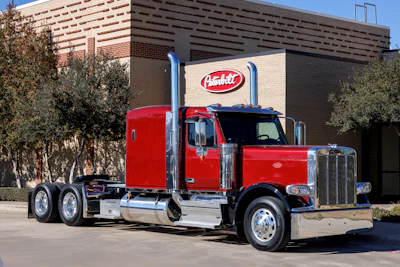
A Washington judge has cleared the way for buyers of trucks with EPA 2021 model year (MY) MX-13 engines to proceed to trial with a class-action suit against Paccar.
Thirty-one customers who say they purchased Kenworth or Peterbilt trucks with the EPA 2021 MX-13 diesel engine filed an amended claim earlier this year alleging the trucks they purchased had defective fuel systems that led to repeated breakdowns and months of downtime. The plaintiffs seek an order for Paccar to notify members of the class, any permissible damages and an order for Paccar to pay for any future repairs to these engines.
[RELATED: Paccar's income up 24% in Q2]
The suit alleges that Paccar knew or should have known about defects in the fuel system and did not reveal that information to its customers. Furthermore, even once problems began, the suit says Paccar continued to install defective engines without supplying a permanent fix to the problem.
"Even more unconscionable was Paccar's effort to limit its customers' remedy to repeated and ineffective repairs while simultaneously ignoring the crippling effects these failures have on its customers' operations," the amended complaint says. "Multiple class members have been driven to financial ruin by this issue and the resale value of affected trucks has diminished dramatically. Truck dealers don't want them on their lots because no one wants to buy them except at a drastically reduced price due to their diminished usefulness."
[RELATED: Paccar updates engine software to align with EPA guidance]
Some customers, the complaint says, reported a 60% devaluation in the trucks based on buyback offers from the same dealers who sold the trucks new.
While technicians and others in the field pointed the finger at failing fuel injectors, the suit says, Paccar instead looked at certain fuel additives and environmental factors. The complaint refutes this with an excerpt from a statement by John Rich, Paccar's chief technology officer, that states in part, "Lots of data from the North American experience — the injector is not tolerant of normal contaminants in the fuel matrix. Our 21as, Bosch and Cummins injectors capable ... new injector is not. Its been the biggest issue for U.S. warranty for over six months."

The complaint also details several of Paccar's attempts at fixing the issue, including modifying the fuel injectors, system flushes, software updates and other potential remedies. However, even though the repairs detailed in the suit were covered by Paccar's warranty, the plaintiffs said none of those solutions worked.
Among the breakdowns cited in the complaint:
- 10th Gear is the original plaintiff in the suit, originally filed in 2023. It says it ordered a new 2022 Kenworth truck from MHC Kenworth of Topeka, Kan., taking delivery of its truck in December 2021. It began operating the truck in January 2022, but by March, with 1,000 miles on the engine, it was in the shop. It was down for four weeks, the complaint says. Three fuel injectors were replaced. It was back in the shop again at 37,000 miles; at 49,710 miles; 152,929 miles; 164,661 miles; 172,239 miles; 202,995 miles; and 206,601 miles. All for fuel system problems.
- G4 Innovations says it suffered hundreds of thousands of dollars in damages as the result of downtime related to four 2022 Kenworth T680 trucks purchased from MHC Kenworth in Olathe, Kan. It experienced problems with all four trucks and says MHC's technicians told them the problem lay with the holes in the fuel injectors' spray tips, which were too small. G4 says it was told a new injector was being developed, but was not yet available.
- Little Diesel Transportation says it bought five 2022 Kenworth T680 trucks from MHC Kenworth in Springfield, Mo. It, too, experienced fuel system problems with all of its trucks. It says its trucks were in the shop 19 separate times for a total of 110 days.
- LZS Ceremonial Trails says it bought a 2022 Peterbilt 579 from Rush Truck Center in Orlando in August 2022. Starting in November, it started having trouble with the truck and returned it to Rush, where fuel system repairs were covered by Paccar's warranty. The company says Rush technicians told them the truck needed six new fuel injectors, but they were on backorder and the downtime was estimated at four months. By filing a complaint with Peterbilt, LZS was able to get the repair expedited, but the truck continued to experience fuel system problems. Eventually, LZS says it was forced to pay for repairs out of pocket to get them done in a timely manner.
- CRC Transport says it bought 25 2023 Peterbilt 389 trucks from various approved dealers across the country and experienced problems with 24 of them, all related to the fuel system and covered by Paccar's warranty.
- San Benito Equipment says it bought 10 2024 Peterbilt trucks that it then leased to Brent Redmond Transportation. All 10 have had problems resulting in 286 days of downtime related to fuel system issues.
- Wolverine Haulers purchased or leased four 2024 Peterbilt trucks from dealers in Michigan and experienced fuel system problems with all four, starting at around 6,000 miles. Repairs, the complaint says, were often delayed for months due to a shortage of replacement injectors. The company ended up surrendering the fleet to Paccar Financial as it could no longer service the debt on the trucks.
The complaint does allow that Paccar rolled out what it says is a permanent solution to the fuel system problems — new injectors called Pack 2s. However, the complaint says it remains unclear if the new injectors are, in fact, a permanent solution.
According to RigDig (owned by Fusable, parent company of TPS), there are about 14,000 active trucks with an MX-13 engine from model years 2021-2023, when Paccar was using the EPA 2021 hardware.
In its rebuttal to the complaint, Paccar claimed the Clean Air Act, which covers the fuel system as part of emissions control, preempts the plaintiffs' claims the company breached its warranty and that, furthermore, by replacing the fuel injectors at no cost to the plaintiffs, it in fact honored its warranty. The judge shot down this argument, clearing the way for trial.
"Plaintiffs plausibly plead an engine warranty theory based on defects affecting the operation of the engine without regard to whether those same defects also affected emissions compliance," says Judge Robert S. Lasnik.
Trial date in the case was set for October 2027.