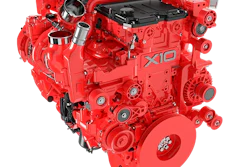












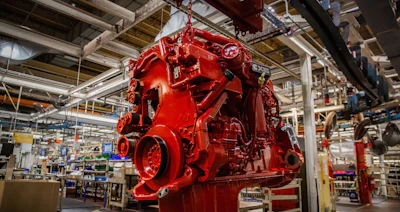
Cummins is updating engine calibrations to give operators more time to complete repairs and minimize downtime related to diesel exhaust fluid (DEF) inducements after the EPA issued updated guidance on DEF-related inducements and final inducement speeds.
"We appreciate EPA's engagement with industry stakeholders and view the revised guidance as an important step toward addressing customer concerns in a practical, compliance-focused way," says Brett Merritt, vice president and president of Cummins' engine business. "Cummins has acted to support reliable implementation of these updates, help customers and operators reduce unnecessary downtime and continue to meet emissions requirements."
[RELATED: Cummins delaying launch of new engines]
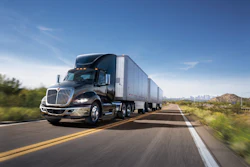
For heavy-duty engines, the updates extend the time to initial and subsequent derate events for certain tampering and DEF quality conditions and increase final derate speed to 25 mph. For eligible motorcoach applications, the updates will provide additional flexibility, including more time before initial inducement, removal of the secondary derate step in certain conditions, and an increase in final derate speed to 50 mph.
DEF is still required for the emissions system to operate properly and DEF level inducement steps based on remaining tank level remain in place. The updates are intended to provide additional operational flexibility while maintaining emissions system requirements, Cummins says.
The company has already begun offering revised calibrations for more than 1.5 million engines in medium- and heavy-duty trucks, including certain truck applications dating back to model year 2017 and certain motorcoach applications dating back to model year 2018.
Paccar and Daimler also recently announced software update plans to adhere to the new EPA guidance.