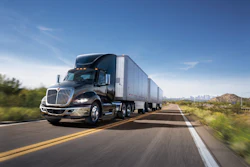












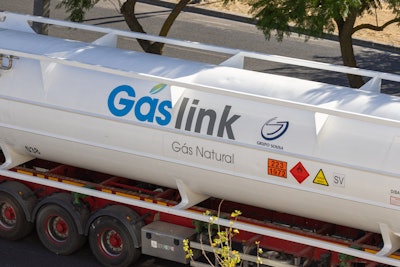
Natural gas fueling and related technologies—such as the Cummins X15N engine—have frequented industry headlines over the past year, as they continue to prove themselves as effective, affordable, and readily available alternatives to diesel, particularly for long-haul operations.
Today, The Transport Project—a coalition consisting of around 200 fleets, OEMs, dealers, and suppliers—released its Q4 2025 Natural Gas Vehicle Refueling Infrastructure Report, which shows increased number of compressed natural gas (CNG) fueling stations available across the U.S.
The full report, featuring detailed state-by-state data and infrastructure trends, is available only to TTP members.
To date, there are 1,385 CNG fueling stations in the nation, and 81 stations offering liquified natural gas (LNG).
CNG infrastructure is mostly concentrated in states such as California, which leads with 318 stations, followed by Oklahoma, Texas, Pennsylvania, and Florida. Georgia, Wisconsin, New York, Ohio, and Utah also rank among the top markets. In total, CNG fueling locations are operating in 47 states and Washington, D.C.
For example, California's low carbon fuel standard (LCFS) data shows that bio-CNG used in the state carries a carbon intensity of –218.89 gCO2e/MJ (the measurement of how the fuel delivers a net reduction in GHG emissions over its full life cycle), meaning it enables natural gas vehicle fleets to achieve carbon-negative performance when fueling.
Despite the nation's increased CNG refueling stations, renewable natural gas (RNG) still accounted for 86 percent of all natural gas used for transportation fuel last year.
[Related: Clean Energy activates RNG pipeline flow at South Fork Dairy]
TTP's RNG congressional push
Earlier this month, TTP sent a letter to House and Senate tax leaders, backed by nearly 200 companies and organizations, calling on Congress to extend the Alternative Fuel Tax Credit and advance the Renewable Natural Gas Incentive Act.
The AFTC, which expired at the end of 2024, provides a 50-cent-per-gallon credit for CNG and LNG and has supported fleet investment in domestically produced, lower-emission fuels since its launch in 2005.

The proposed bipartisan Renewable Natural Gas Incentive Tax Credit would provide a $1.00-per-gallon credit for vehicles fueled by RNG, aiming to accelerate adoption of cleaner and more efficient transportation fuels nationwide. The measure was introduced by Senators Thom Tillis and Mark Warner and Representatives Brian Fitzpatrick and Linda Sanchez.