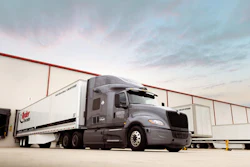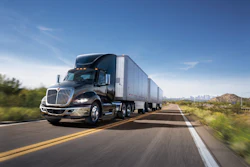












Despite a sluggish freight market, Volvo Trucks North America (VTNA) is confident that skyrocketing diesel costs will drive carriers toward its newest, high-efficiency models. During a recent showcase for the VNR regional-haul truck in Dublin, Virginia, VTNA leadership emphasized that double-digit fuel savings are fundamentally changing the math for fleet owners.
New economics of fuel
With diesel hitting record highs—averaging $5.38 nationally and peaking at $7.69 in parts of California—the financial incentive to upgrade has intensified. VTNA President Peter Voorhoeve noted that annual fuel savings per truck have jumped from roughly $5,000 to over $8,000, drastically accelerating motor carriers' return on investment.
The new Volvo VNR and VNL models feature a 10% improvement in fuel economy, and Magnus Koeck, VTNA vice president of marketing and brand management, noted that those savings can boost a carrier’s thin 3% profit margin up to 4% or more. Voorhoeve provided a stark comparison of how fuel costs reshape the truck's value proposition: at $3.50/gallon, a 10% efficiency gain saves roughly $5,000 per year; at current record highs, those same savings can jump to $8,000 or more annually.
"The payback calculation for the Volvo VNL and VNR only became much better," Voorhoeve noted against the backdrop of current elevated diesel prices.
Looking forward to 2026 and toward EPA27
February saw the strongest order volume since 1996, driven by the urgent need to replace aging fleets (now averaging 6.5 years old) rather than an increase in freight demand. VTNA anticipates a slow start to 2026, followed by a year-end surge as companies scramble to buy trucks before EPA27 emissions standards take effect.
“We are at the tipping point where (fleets) have to replenish their trucks,” Koeck said, noting the higher operating expenses associated with older models.
Voorhoeve cautioned fleets against waiting for final clarity on warranty and durability rules within EPA's 2027 rule, noting that the only certainty is a price increase. "If you buy a truck right now, you will have a compliant truck... if you wait half a year, one thing you know for sure is that it will be more expensive," he warned.

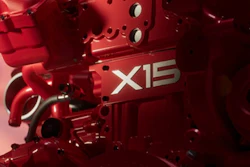
Voorhoeve confirmed that Volvo is fully prepared for the upcoming NOx limit of 0.035 g/hp-hr. The company is ready to meet even the most rigorous durability and warranty requirements through planned engine updates, ensuring they stay ahead of the regulatory curve.
Volvo has also shifted its pricing approach regarding trade policy. Instead of applying surcharges independently for steel and aluminum, the company has integrated these costs into the base price of the trucks. Voorhoeve noted that because the tariff landscape under Section 232 has stabilized, the "surcharge" model is no longer necessary for standard pricing.
"We have a competitive advantage by being a U.S. manufacturer," Voorhoeve said. "We don't have any tariff surcharges anymore... the competition will have it significantly more difficult with the tariffs they now have to pay for products built in Mexico."
Market demand and production strategy
The VNR has already secured 2,000 orders, primarily from retail and grocery distribution chains, LTL carriers, and among fleets with straight trucks—a segment where Volvo expects to grow its footprint.
"We have high ambitions for the future," Koeck said, "and we need more capacity to meet the demand.”
To meet demand for trucks, Volvo is investing $700 million in a new facility in Monterrey, Mexico. However, Voorhoeve clarified that this is not a departure from U.S. manufacturing. The New River Valley plant in Virginia, where Volvo has also invested close to $500 million, will still handle 80% of production. The Mexico site, which should start rolling out trucks later this summer, is designed to provide the "swing capacity" needed to respond to sudden market spikes without the bottlenecks seen in previous order cycles.
Voorhoeve said Volvo is aiming to increase its North American market share from its historical average of 10–11% to 15% within the next five years. This growth strategy is anchored in the company's first complete platform overhaul since the 1990s. "With the investments we're making, the product platform we have, and the anticipated appreciation, we should be able to run at around 15% market share," Voorhoeve said.
Volvo's 395 North American dealers, too, have upped their ante in the game, having invested $1 billion in the network.