











Amazon is expanding its less-than-truckload freight shipping service to any domestic destination, allowing businesses to move partial cargo loads outside of Amazon's own fulfillment network, the company announced Wednesday.
The service, previously limited to inbound shipments heading to Amazon facilities, will now deliver to third-party warehouses, distribution centers, and retail partners, pitting the retail giant against trucking companies with legacies dating back roughly a century and newly minted LTL king FedEx Freight (CCJ Top 250, No. 1).
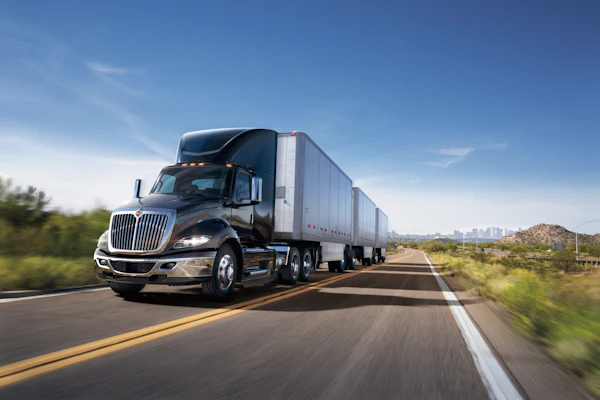
Amazon's LTL service is supported by a massive logistics infrastructure, including more than 80,000 trailers, and typically handles shipments ranging from one to six pallets, or between 150 and 15,000 pounds, the company said.
"The feedback from Amazon selling partners using our LTL service was clear: the technology, visibility, and reliability were exactly what they needed—and they wanted to use it more broadly," Jim Ruiz, director of Amazon Freight, said in a statement.
 A map of Amazon's full LTL pickup, delivery, and destination coverage.
Amazon's LTL service has contracted with tens of thousands of the platform's selling partners and vendors since 2019, moving millions of pallets across the U.S. last year. For e-commerce companies already utilizing Amazon’s logistics, the broader rollout aims to streamline supply chains.
"In the past year, we've seen faster transit times and lower costs compared to traditional LTL services," said Zech Hintz, vice president of global supply chain at Pattern, an e-commerce accelerator that has used Amazon’s shipping services for four years. "It's rare to get both, and that's what makes this service stand out."
Amazon is pitching several logistical advantages to compete with traditional freight carriers, including next-day live pickup for orders placed by 5 p.m., same-day pickup via drop trailers, and standing daily pickups for high-volume shippers.
Amazon's LTL footprint operates from network of 26 terminals, a rather small number compared to the 200-plus facilities used by likes of Saia (No. 18) and Old Dominion (No. 9), and FedEx Freight and Estes Express Lines's (No. 8) more than 300 facilities.
The tech giant and world's second-largest retailer said it will lean heavily on its infrastructure to attract users, offering real-time GPS tracking, automated appointment scheduling, and a sensor-equipped fleet featuring cargo cameras and door sensors. The service also integrates with existing electronic data interchange (EDI) systems for automated ordering and invoicing.