













North American commercial vehicle suppliers are tired of talking about uncertainty. The topic has dominated the market for more than a year. It’s not going anywhere.
Succeeding in today’s market isn’t about unscrambling uncertainty or predicting the future. It’s about focusing on what is certain. What is known. And delivering the best products to meet those expectations.
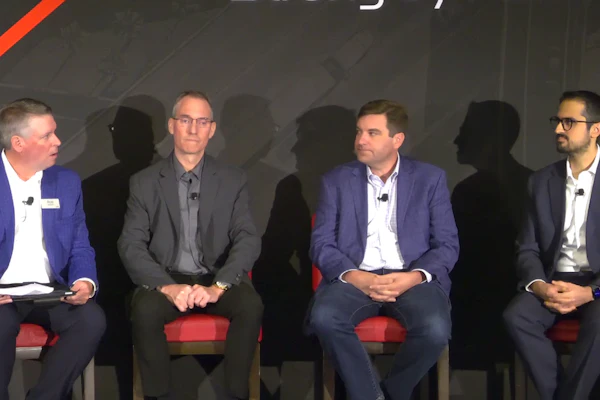
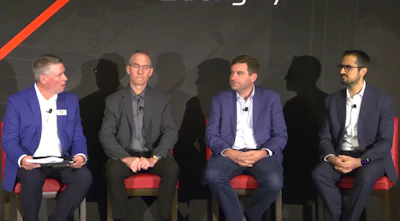
“I think large organization have a tendency to get comfortable and you can’t do that anymore,” Dan Forthoffer, president, Phillips Innovations, shared during a real-world supplier panel Wednesday at MEMA’s Commercial Vehicle Outlook Conference. Over the last year, he says manufacturers have learned “it doesn’t matter how long you work into the night. Tomorrow morning it’s going to change.”
ZF’s Dirk Wohltmann agrees. As head of the company’s North America operations, Wohltmann says teams have stopped trying to predict regulatory or trade actions, instead focusing its resources on what it knows: carriers are eager to increase utilization rates as freight improves but are limited by the number of quality drivers available. That’s why ZF’s priorities into 2027 and beyond are developing products and technologies that extend life cycles, reduce service expectations and increase driver safety.
“We believe uptime is defining factor for the fleets and uptime starts not with electronics but mechanical expertise and mechatronics,” he says.
[RELATED: MacKay & Company advises cautious outlook despite market gains]
Bosch is taking a similar approach, says Mohammed Fatouraie, director of systems engineering, baking uncertainty into its business forecasting and focusing its concrete planning on total cost of ownership (TCO) reducing solutions. He says today’s modern carriers don’t have the luxury of overcoming inefficiencies through a robust market. Freight rates aren’t high enough nor are loads plentiful enough to run trucks that can’t be relied upon.
Fatouraie cites three areas — connected vehicles, ADAS technologies and vehicle energy management — as spots where Bosch can drive TCO improvements and believes the other suppliers on the panel can do the same. But he also notes TCO solutions can’t be sold on promises; “you need to have tangible ROI that can be demonstrated to the fleets.”

Forthoffer agrees. Customers realize they require advanced solutions and technologies to improve their operations, but they lack the willingness or flexibility to invest in solutions that might not pay off. A year used to be an industry standard for ROI on new technologies but today Forthoffer says that’s creeping closer to nine months.
“You need to actually have calculable return,” he says.
But that isn’t to say that high-concept, higher-cost future technology shouldn’t continue to be developed. Or won’t eventually have a market. Wednesday’s panelists were in agreement that autonomous technologies will eventually permeate the North American trucking sector. Forthoffer believes the technology is already good enough to work, while Wohltmann adds he’s been a passenger in self-driving vehicles that felt safer than riding with a driver.
[RELATED: First Brands saga ends in liquidation; judge orders Chapter 7]
The trio believe the cost barriers to autonomous adoption will be easier to overcome than public perceptions. Forthoffer says the former could be reduced simply through adoption. As more carriers invest in the solutions, production costs will decrease and ROI will become more tangible. And Fatouraie believes the ROI calculation gets easier once vehicles reach or exceed Level 4 autonomy as driver responsibilities (and costs) decrease.
Wohltmann says the problem is legislation, or a lack of it. Without laws in place as to when, where and how autonomous commercial vehicles can operate, carriers will be hesitant to put the equipment on the road. No carrier wants to be the first to be sued in a driverless truck accident case, he says.