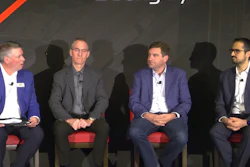











Jonathan Starks, CEO at FTR: Transportation Intelligence, says while there has been some recovery in the industry, there are some pressures in the marketplace that may temper gains.
Coming into the year, Starks says, negotiations around the U.S.-Mexico-Canada Agreement were the key risk for truck transportation. But that's been overshadowed by the war in Iran and its effects — especially on the cost of diesel — which is close to a record high.
"We think there's going to be elevated crude prices going forward, but there's also inventory issues," Starks told attendees of MEMA's 2026 Commercial Vehicle Outlook Conference. "Is there capability for diesel to come down significantly? I don't see it."
[RELATED: MacKay & Company advises cautious outlook despite market gains]
Other pressures are coming from metals prices, particularly aluminum and volatility in the goods transport gross domestic product. As experts have said for months, the market is in a capacity-driven recovery and Starks' data bears that out. Small operations are still elevated, he says, while larger fleets have cut their capacity. That holds as far as analysts can see, he says, as the government hasn't provided fresh data since earlier this year as it implements a new registration system.
"We're not getting all the normal data that we would typically get from the administration," he says.
Starks also outlined a number of external stresses on trucking capacity, such as enforcement of English language proficiency regulations and scrutiny of non-domiciled CDLs, chameleon carriers, CDL training and tighter carrier selection standards. On their own, he says, none of these make a huge impact on the industry but, taken together, they add pressure to the system.
"All of these are stressors on what is happening within the market for the ability for capacity to be available," Starks says.
Rates are up, though, as capacity tightens and active truck utilization is close to 100%, Starks says, and going forward, growth depends on two elements: demand growth and enforcement's effect on getting new drivers into the industry. Should enforcement continue to strangle the supply of drivers and the market remain fully utilized or nearly fully utilized for an extended period, it would, eventually correct itself and prices would surge again.

[RELATED: Class 8 year-over-year numbers 'kind of hard to get your head around']
Starks doesn't see two years of truckload rate growth in the contract market, which is a determining factor in when carriers buy trucks, but he does see continuing growth, allowing carriers to repair their net income, fix their margins and bring themselves into a cashflow balance.
What he does see is a 3-5% increase in average Class 8 truck costs as tariffs and material costs bear fruit. That isn't as much as they could've gone up, however, as clarity on EPA regulations allows for some lower manufacturing costs and more flexibility in meeting clean air requirements, including implementing non-conformance penalties (NCPs) for engines.
"That's the thing that changes what the market could do moving forward," Starks says.
NCPs would allow pre-2027 NOx regulation engines to remain on the market in exchange for a penalty paid by the OEM and later passed onto buyers. For 2027, that would be about $7,000 per Class 8 engine. That lowers the expect 2027 emissions upcharge versus earlier assumptions, giving OEMs more time to implement changes.
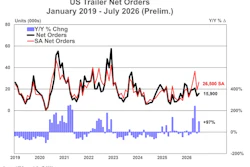
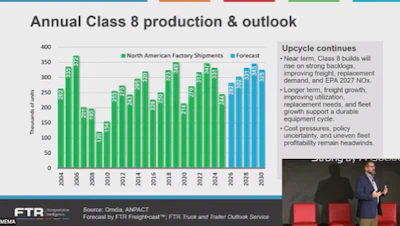
The upcycle in Class 8 production will continue, Starks predicts, with upcoming difficult quarters smoothed out by the new EPA regulations. The medium-duty market has also "turned the corner" on production, Starks says, as factory shipments continue to improve from recent lows. Inventories are also coming down from record levels, but are still a significant issue," Stark says.
Suppliers should take care to understand how the NCP changes affect their products and OEM needs and plans, Starks says, urging attendees to really get a granular perspective on these issues.
"Without knowing what the plan is, you have the potential to be caught off guard," he says.