











Last week, clean transportation non-profit Calstart published its newest Zeroing in on Zero-Emission Trucks report.
Written to track the proliferation of zero-emission trucks (ZET) in the commercial vehicle sector, Calstart reports more than 4% of all new trucks that hit American roadways in the latter half of 2025 were ZETs. Calstart says the percentage was more than double the deployment rate of similar vehicles in the first half of the year, and now brings the total number of ZET deployments cumulatively through 2025 to 72,309 vehicles.
Considering the political landscape around ZETs and all zero-emission vehicles (ZEVs) last year, Calstart reports the deployment data signifies some commercial vehicle markets continue to be increasingly favorable for electrification.
[RELATED: Deeper analysis of Calstart’s report from our team at Clean Trucking]
“The data points to a strong zero-emission future as operational cost advantages continue to accelerate over fossil fuels, capital costs continue declining and operator acceptance trends in a positive direction,” says Jared Schnader, executive vice president of initiatives in Calstart’s Florida Regional Office.
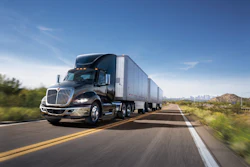
But while that might be true market wide, implementation data show the Class 8 market is still a long way from an electric reality.
Calstart’s report states from 2017 through 2025, only 2,509 heavy-duty ZETs have been deployed nationwide. That represents just 3.4% of all commercial ZETs to reach the roadways, and is a miniscule 0.046% of the total number heavy-duty trucks to be deployed during the same period.
 Cumultative zero-emission truck deployments in the United States, 2017 to 2025.Calstart
In its report, Calstart references the adoption of ZETs across vehicle classes in China as an example that sales of battery vehicles can scale quickly. Calstart reports new energy heavy-duty trucks — including electric, plugin hybrid and hydrogen-powered vehicles — accounted for 54% of total heavy-duty truck sales in China in December; that’s more than 54,000 units.

But the Chinese marketplace has infrastructure advantages and government support the U.S. has yet to replicate.
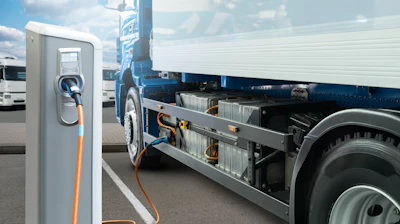
As Trucks, Parts, Service previously reported, installation of heavy-duty battery charging equipment can be a costly, cumbersome and multi-year process. Limited charging infrastructure was cited by individual states in delaying California Air Resources Board (CARB) zero-emission truck adoption regulations in 2025 (before the White House and EPA nuked the regs entirely), and even fleets and dealers willing to invest in the technology without mandate pressures have expressed timeline challenges.
Calstart acknowledges those challenges in its reporting. According to its data, 64,209 of the 72,309 ZETs (88.7%) on American highways are cargo vans, and Calstart references “ideal duty cycle capability, lower upfront costs and more streamlined infrastructure for fleets” as reasons for the segment’s sales success.
The Class 8 market has none of that. Calstart writes in its conclusion that sales gains “across yard tractors, refuse trucks and medium-duty step vans indicate that adoption is expanding across a wider range of applications,” but omits heavy-duty and Class 8 trucks from that list.
[RELATED: Analyzing the details of California early ZEV sales success]
Additionally, in looking ahead, Calstart states, “the pace of future deployments will be heavily influenced by how effectively states, infrastructure providers, fleets and other stakeholders work together to address practical barriers that shape adoption.”
Financial support, infrastructure planning, policy certainty and education all remain essential to continued adoption, the report continues, and in today’s Class 8 space, none of those factors exist.
As the North American Council of Freight Efficiency (NACFE) has posited with its Messy Middle theory for many years, the long-term future of commercial trucking in North America is unlikely to be diesel exclusive. Other applications have value — particularly in lower classes — as Calstart’s report shows, and the lack of federal support for ZEVs today isn’t guaranteed for tomorrow.
But, in the meantime, it’s fair to question any top-line ZET, ZEV or EV adoption statistics that reference the commercial trucking sector. The electric truck boom is still a long way from the Class 8 marketplace.