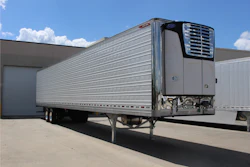












The surprisingly strong March totals for trailer orders first reported by ACT Research last month were confirmed by FTR Friday, as the company reported preliminary orders of 18,045 units, a stronger than expected total up 36% month over month.
While still down 15% against March 2026, FTR says the sequential gain is counter to typical seasonality as net orders usually fall around 20% month over month in March. Yet the company also acknowledges that even with the sharp monthly increase, net orders for this cycle are still somewhat soft, historically. March’s total was below the 10-year March average of 20,276 units, and orders for the 2026 U.S. trailer order season (Sept. 2025 to March 2026) are down 19% year over year and down 15% for the year-to-date.
“Despite the healthy increase in orders, trailer demand remains largely replacement driven as fleets still have excess trailer capacity,” says Dan Moyer, FTR senior analyst, commercial vehicles. “In contrast, Class 8 demand has strengthened meaningfully, supported by improving asset utilization, firmer rate expectations — and better visibility into tariff-adjusted pricing and EPA 2027 NOx regulations — all of which combine to drive an early-cycle recovery in orders. As a result, fleet capital allocation is increasingly shifting toward power units aligned with forward-looking needs, leaving trailers relatively deprioritized despite improved freight market conditions.”
[RELATED: Who are North America’s best trailer dealers?]
Trailer build rates also were up 15% month over month to 17,501 units, but still slightly below 2026. Year-to-date builds are also down 1% year over year, reflecting continued production discipline from manufacturers.
“The U.S. trailer market continues to face persistent headwinds. Elevated steel and aluminum costs, ongoing trade uncertainty, high financing costs — and constrained capital spending are limiting incremental demand and keeping orders subdued,” says Moyer.