











In 2018, Felling Trailers won a National Association of Trailer Manufacturers' (NATM) Green Manufacturing Award.
The company's not resting on its laurels.
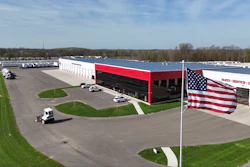
Over the past few years, it has made a series of investments in its facilities in Minnesota aimed at reducing its environmental footprint and improving efficiency, Felling says.

"Every initiative we've added since 2018 has been chosen because it makes Felling a safer, cleaner place to work and a better community member to Sauk Centre," says Brenda Jennissen, president and CEO.
[RELATED: Felling announces 2026 Trailer for a Cause program]
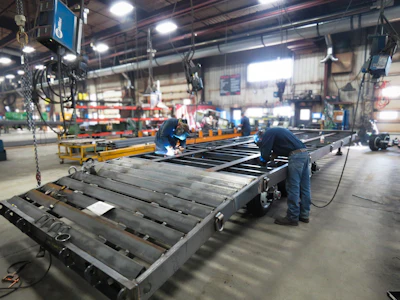
On the shop floor, Felling completed a comprehensive LED lighting conversion across all 11 of its buildings in Sauk Centre. This replaced older fluorescent fixtures, improving visibility and reducing eye strain for employees as well as cutting energy use. The retrofit of the shop production area reduced fixture wattage by more than half, saving more then $25,000 per year in energy costs.

In Litchfield, Felling upgraded its welding fume and gas ventilation system from a soft start to a variable frequency drive (VFD). The new system runs at just 30% of its previous capacity while fully protecting employees' breathing zones. This change also saves more than $25,000 per year in costs, Felling says.
Cardboard from incoming shipments is baled and donated to Cardboard Cares, a local organization that funds art education for K-12 students. It also partners with Clean Earth to properly manage liquid paint waste and fluorescent bulbs. Felling recycled more than 3,000 bulbs after the lighting retrofit and also recycles around 250,000 pounds of scrap steel annually. Last year, Felling recycled 4,000 pounds of used tires.
"Our team and our community are as much a part of this commitment as the environment itself," Jennissen says.

Fellings' new 92,000-sq.-ft., powder coat paint facility contributes to a reduction in the company's facility wide volatile organic compound emissions, which are down from 5 tons in 2024 to 3.49 tons in 2025. The company also upgraded its fiber laser cutting technology to a new Mitsubishi laser which cuts energy use per part, reduces reliance on delivered assist gases and lowers material scrap.

"Investing in this equipment was as much a business decision as an environmental one," says Pat Jennissen, vice president of sales and marketing. "When we can cut waste, cut energy use and build a better trailer at the same time, that's the kind of investment that makes sense on every level."