











Industry data indicates over half of private fleets use full-service leasing (FSL), with nearly 30% leasing most or all heavy-duty units.
These numbers have been pretty consistent over my 35 years in the leasing industry, but I believe they are about to change as more businesses move to FSL.
Here’s why:
- Economic considerations: Companies are prioritizing cash preservation. Leasing offers lower payments and predictable maintenance costs.
- Regulatory uncertainty: The 2027 EPA emission regulations and tariff volatility increase the appeal of leasing, as new engine requirements will raise costs and complexity.
- Strategic sourcing: Fleets should evaluate where trucks are manufactured, as tariffs can significantly impact pricing. Choosing manufacturers with robust EPA compliance strategies is essential. A pre-buy of 2026 models may be prudent.
- Lease structure flexibility: Contrary to common perceptions, FSL can be customized. Leading providers allow unbundling of services, ensuring clients pay only for what they need. Bundling finance, maintenance, and other services can drive operational efficiency and cost savings.
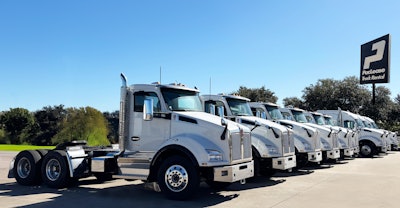
- Maintenance options: Even companies with in-house facilities can outsource maintenance to FSL providers. PacLease and others can often include on-site support.
Aside from the new variables in 2026, there are things to consider when deciding whether or not to lease, buy or outsource.
What’s the regularity and the volume of your shipments, and how much control do you want with your fleet? How important is it that your product arrives on time? Can you trust your reputation to someone who doesn’t know your customers? While most trucking firms are reputable, in some cases, your product moves on their schedule rather than yours. And their drivers are unlikely to know your products, routes or customers.
[RELATED: Procede launches enhanced Lease & Rental solution]
If on-time delivery and putting a face to your company aren’t critical, the trucking company option may be right for you. If, however, control of shipping is paramount to your operation and you transport often, your best option is to have direct control of your transportation, and that means either owning or leasing equipment.
Which to do? Here are key considerations for the lease vs. buy decision:
- Financial resources: If surplus capital is available and no better investment exists, purchasing may be viable. However, trucks are depreciating assets. Leasing reduces monthly costs and shifts residual value risk to the lessor. Financial officers should assess tax implications and capital allocation.
- Fleet size and complexity: Smaller fleets often benefit most from leasing, avoiding the overhead of in-house maintenance. Larger fleets may selectively bundle services.
- Operational range: Multi-state or regional operations gain from leasing due to nationwide support and emergency roadside service, enabling accurate budgeting and minimizing downtime.
And here’s something to consider when it comes to full-service lease benefits: FSL extends beyond financing, offering preventive maintenance, roadside assistance, compliance solutions and administrative support (e.g., tax reporting, licensing). Services are tailored to client needs, which maximizes productivity while reducing costs.
If you go down the FSL road, it’s imperative to select the right leasing partner. Choose a lessor that customizes solutions to your operational requirements. Proper vehicle specification is critical to avoid downtime and inefficiency — a truck built for your specific application will perform better, and your drivers will be happier.
In addition, evaluate the provider’s ability to support your schedule, supply substitute vehicles, and enhance your company’s image. A strong partnership is built on understanding your business and aligning transportation solutions with your strategic objectives.