











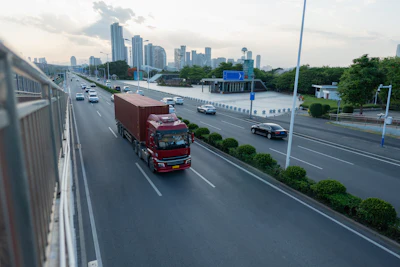
McKinsey & Company offers insights into Chinese truck manufacturing for North American suppliers.
- Chinese manufacturers build commercial trucks in half the time and cost compared to North American OEMs.
- Chinese OEMs have doubled vehicle quality in 12 years with minimal price increases, while Western OEMs struggle with 2% cost reductions.
- McKinsey recommends creating cross-departmental teams to implement Eastern production principles and develop new manufacturing systems to replace legacy operations.
Chinese manufacturers can build a commercial truck — from production design to full assembly — in half the time it takes a North American OEM. And for half the cost.
That may not mean anything to you today, but it absolutely could impact your business tomorrow.
During a presentation at MEMA’s Commercial Vehicle Outlook Conference last month, McKinsey partners Umesh Goel and Prasad Ganorkar shared with North American commercial vehicle suppliers how China’s speed to market and commitment to manufacturing efficiency is upending the status quo in vehicle production.
By assembling cars and trucks at speeds the world has never seen before, the pair say China is positioning itself to disrupt global markets across all classes. Without learning from the Chinese and improving production capabilities accordingly, the duo say North American manufacturers could soon find themselves bleeding market share to new entrants capable of delivering vehicles at unprecedented rates and costs.
“Western OEMs are behind,” says Goel. “In the past, some of these disrupters were seen as not being good quality. But people are seeing now the quality is better.” Some models are even seen as on par if not better than western versions, he adds. And with Chinese players already gaining ground in the automotive and bus markets in Europe, their proliferation into trucking and, eventually, other continents, is only a matter of time.
Assuming the North American Class 8 truck market is impervious to new entrants is dangerous and wrong, Goel says. Ganorkar adds regulatory hurdles won’t prevent China’s entrance forever. Now is the time to invest heavily in fortification, in building what Goel calls “fact-based opinions without emotions” about what North American OEMs do well, do poorly and must improve.
“For 30 years we’ve been thinking about 2% reduction in cost, how do you think about 40%?” he asks. “How do you make things uncomfortable?”
[RELATED: Stressors remain as trucking goes through capacity-based recovery]

Ganorkar says McKinsey’s research indicates Chinese heavy-duty electric trucks have achieved about 80% of the performance capabilities of North American equivalents, and for slightly less than half the price. That number might seem defeatable in the market, especially for a battery-electric vehicle (BEV), but he says just 12 years ago that performance level was 40%. Chinese OEMs have doubled the quality of their vehicles in a dozen years, with little impact on price.
 Umesh Goel with McKinsey & Company speaks about the efficiency principles that drive commercial vehicle production in China during MEMA's Commercial Vehicle Outlook Conference last month.
North American OEMs have taken notice.
During MEMA’s event, two Volvo Group members shared how their North American truck brands are attempting to remove cost from their supply chains and lower production costs.
Ganorker says there is awareness across the North American market that costs must be reduced. But competing against a future low-cost, high-quality Chinese truck will take more than nickel-and-dime procurement savings. He says the entire North American production method will need to be overturned, reoptimized and rebuilt.
In a new age of technology, where AI can replicate and automate in minutes processes that once took entire teams weeks and months to complete, Goel says western OEMs will need to be more like the Chinese: making the majority of production decisions in single meetings; taking hours, not weeks to implement design changes; and determining cost estimates in a day, not months.
[RELATED: Canada levies retaliatory tariffs against U.S. imports]
The McKinsey duo say the best place for North American (and European) manufacturers to start is internally, creating teams with representation from all departments who are solely responsible for understanding and acting upon these new eastern principles.
The pair advises these teams create entirely new production processes that could be tested, validated and implemented in place of legacy systems. They say doing nothing and expecting customers to not be enticed by Chinese equipment is a failed strategy. The same way Japanese and Korean automakers eventually permeated the domestic market, Chinese heavy truck OEMs will do the same.
“OEMs need to start thinking this is possible,” Goel says, “and stop making excuses.”