










Here’s what you need to know:
- Analysts fear effects of the war in Iran can spike diesel prices and increase volatility, just as a recovery seems to be starting.
- FTR's Jonathan Starks and Avery Vise talk about what happened last time diesel prices spiked in 2022 and why this time is different.
- More concrete answers on tariffs and emissions regulations are propping up Class 8 orders.
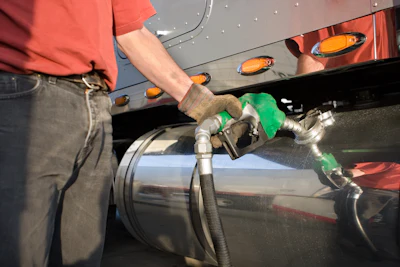
Iran — and the war's effect on diesel prices — may throw a wrench in hopeful 2026 forecasts, depending on how high the price of diesel goes and how long it lasts.
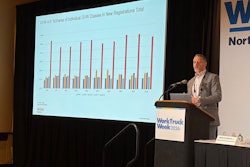
"It's been a very volatile environment just over the span of the last three days," Jonathan Starks, FTR's CEO, said at a MEMA Commercial Vehicle Pulse webinar on Wednesday as oil sat around $90 per barrel.
[RELATED: Diesel deja vu, and documenting an independent Trucker of the Month's road ahead]
Starks and Vice President of Trucking Avery Vise both pointed out in webinars that, in 2022, another surge in diesel prices corresponded with a surge of carriers leaving the marketplace. However, Vise says, circumstances in 2022 were different.
Spot rates were already coming down, manufacturing was trailing off and real spending was holding steady. Carriers were hiring anyone that could sit behind the wheel. Now, though, spot rates are going up and truckload carriers are reducing their workforces. Manufacturing is improving, but not up to to 2022 levels. Back then, Vise says, fuel prices helped trigger the freight recession that is just now ending.
"Rather than actually creating a deflationary environment for rates, it's probably going to be the opposite in this case," Vise says. Even though oil prices are riding a roller coaster, the effect could be more muted.
"If we're out of Iran in two weeks and a whole bunch of stability is introduced and oil comes down ... I don't see any impact," Vise says. "That's not my base case right now, though. Any time you go to the Middle East, it can have long tentacles."
Nearly 24 hours later, Vise's presentation — delivered when oil prices were back to $100 per barrel — reiterated that point. The cost per mile for fuel rose 14 cents in a week to 69 cents, he says.
"The idea that, 'oh, this is winding down,' Vise says. "Not so much."
Starks says clarity on emissions regulations and tariffs is what the company assumes is behind higher Class 8 orders in January and February.
"We can finally order the equipment that we know we need," he says. FTR says the industry is beginning to move into an early recovery phase. Production numbers are coming down, and FTR is forecasting build slots in the first and second quarter are full, but there may still be build spots in the back half of the year.
"We still need to see solid year over year increases in quarters as we go into late spring and early summer months," Starks says. "Those are periods where we typically see weaker orders."

Vise notes that year over year comparisons for Class 8 orders will be strong for the foreseeable future, just because 2025 was so weak. Starks says demand for Class 8 is back to normal activity while medium-duty retail sales continue to decline in a replacement-driven demand environment.
Trailer sales continue to stable, but low, as the market lacks some of the upward pressures that comes with power units. The industry is also getting hit more significantly by higher commodity costs.
"It's a bit of a double whammy that is a negative, specifically in the van market," Starks says.
Rates are also ticking upwards across the board. Dry van spot rates are up 19% year over year, Vise says, and refrigerated spot rates are up 27%. Weather did provide some tailwinds for those increases, but not in flatbed, which is fueled by a manufacturing recovery plus data center construction.