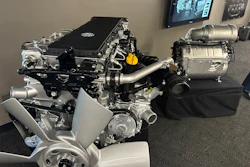












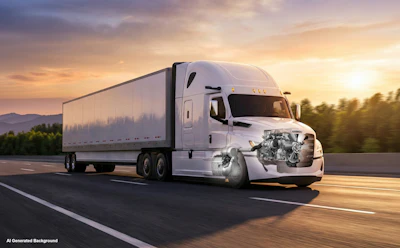
Detroit announced Wednesday its Gen 6 DD13 and DD15 can be specified by customers into Freightliner and Western Star trucks on Sept. 1.
The Detroit Gen 6 engine lineup is designed to meet EPA 2027 emissions requirements while delivering the fuel economy, reliability and performance customers expect from Detroit.
“Customers don’t want to choose between proven performance and future-ready technology. With the Detroit Gen 6 engine platform, they don’t have to,” says David Carson, senior vice president, sales and marketing, Daimler Truck North America. “We’ve built on the foundation customers already know and trust while introducing targeted improvements that make the transition to EPA 2027 straightforward.”
Rather than introducing an all-new engine, Detroit evolved a platform with a long track record of success in customer applications. The company says approximately 75% of Gen 6’s core components carry over from the previous generation, preserving the durability, serviceability and operating characteristics fleets have relied on for years.
Through two decades of evolving emissions requirements, Detroit has continuously refined its heavy-duty engine portfolio while maintaining the performance and reliability that have defined these engines since their introduction. First introduced in 2007, Detroit’s heavy-duty engine platform has sold more than 1.2 million engines in on-highway and vocational applications, providing a proven foundation for the Gen 6 lineup.
[RELATED: Stressors remain as trucking goes through capacity-based recovery]
Detroit’s approach to EPA 2027 compliance builds on decades of designing engines and aftertreatment systems to work together. By engineering both systems as one, Detroit has continuously evolved its heavy-duty engines through increasingly stringent emissions standards while delivering the reliability and improved performance fleets require. Rather than introducing unfamiliar systems, Gen 6 applies technologies customers know today to provide a straightforward path to EPA 2027 compliance.

 Daimler Truck North America
Building on that proven foundation, the Gen 6 engine family incorporates targeted improvements across the engine and aftertreatment system. A redesigned fuel system delivers more consistent fuel flow through a simplified architecture engineered for long-term reliability while retaining optimum fuel pressure for efficiency. Detroit also pairs a pre-SCR system based on familiar SCR technology with an integrated thermal management strategy that uses engine exhaust heat to help the system reach operating temperature more quickly. The result is fewer parked regenerations, improved operational efficiency and a familiar ownership experience.
The integrated design also delivers benefits tailored to specific applications.
[RELATED: Cummins delays launch of X10, new 7-liter B-Series]
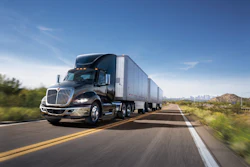
For vocational customers, the aftertreatment system fits within the existing chassis space with no additional back-of-cab impact, allowing body builders and truck equipment manufacturers to continue integrating vocational equipment without redesigning existing upfits or equipment installations. This helps keep EPA 2027-related changes out of the customer’s way. For on-highway fleets, the Gen 6 platform is engineered to deliver fuel-efficient operation and long-haul performance in the Freightliner Cascadia, the industry’s best-selling Class 8 truck, Detroit says.
The company adds the Gen 6 platform underwent three years of testing in extreme temperatures, high-altitude environments, extended idling conditions, along with more than 8 million miles of real-world validation. The result is an EPA 2027-compliant engine platform built on proven technology and refined through decades of emissions innovation, giving customers confidence to invest today while preparing for the road ahead.