










Here's what you need to know
- The economy is continuing to grow amid uncertainty stemming from the conflict in Iran, energy prices and changes in trade policies.
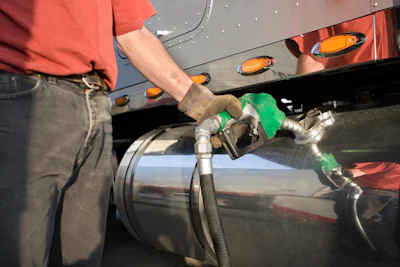
- Diesel prices are spiking and it's likely they'll remain high because while the U.S. is self-sufficient when it comes to oil production, fuel is a global market.
- Data center construction and the growth of artificial intelligence is driving some of the freight market because while computing equipment doesn't generally affect the freight markets, construction does.
Not so long ago, presenters on FTR's monthly State of Freight webinars would date their slides because economic information was coming too quickly.
In May's webinar on Thursday, economist Bill Witte used two slides he used in November because, as he said, nothing's really changed. One slide, titled key uncertainties, is precisely the reason why.
The good news is that even with all of the uncertainty, the economy has "muddled through reasonably well," Witte says.
"It's a picture that shows pretty much a stable situation overall," he says. There are some changes, though. He says real gross domestic product (GDP) hasn't bounced back from last year's government shutdown like he thought it would, but it's still growing.
[RELATED: Order surge sweeps across heavy-duty in first quarter]
Another change is that, in many ways, Witte is more optimistic than he was six months ago. Or, as he says, maybe it's less pessimistic.
"Investment is strong and even gaining a little momentum," he says, and the economy is chugging along with an "adequate" growth rate of about 2%.
Eric Starks, chairman of the board at FTR, says when it's narrowed down to goods transport, GDP was noticeably stronger in the first quarter than analysts had predicted.
"That thing came in hot," he says, even though manufacturing output excluding high-tech has remained lower than expected.
"What we're seeing is more of a supply side recovery," he says. "Things are starting to tighten because supply is not available."
[RELATED: MarketPulse shows splintering sentiment as dealers scuffle while aftermarket rebound continues]

Consumption, a key part of freight demand, is under pressure from inflation and energy costs, particularly due to spiking oil prices after the closure of the Strait of Hormuz.
"We're going to have to keep an eye and see if the consumer can keep buying," he says. Witte says that comes down to the K-shaped economy. The top of the K, he says, are households that aren't as dependent on a regular income. In other words, they aren't living paycheck to paycheck.

Those households are on the bottom part of the K and are feeling more pressures from energy prices and inflation. Witte says the University of Michigan's consumer confidence survey is at its lowest level ever and it's been running since the 1960s.
The stock market fuels more of the consumption for the upper part of the K, Witte says, and any bursting bubble could have an outsized impact on the consumer sector. Starks said the all-in Consumer Price Index is 3.8% higher, year over year, while the Fed would like to see around 2%. That's not going to come down any time soon, he says.
One reason: Oil prices are at near record levels and, like inflation, that's not going to change any time soon.
"This is a big deal for transportation," Stark says. "We saw the largest weekly increase ever (when the bombing of Iran started). That has continued to go up."
And will it drop?
"You should not plant for that to be the case," he warns.
Witte sees a potential bubble forming as businesses (and the stock market) go all in on artificial intelligence (AI). The market likes when businesses are investing in AI, he says, but there are risks, even outside of economics. One of them is the ever-growing calls for increased AI regulation.
[RELATED: Amazon Alexa developer on AI’s ‘house of mirrors’ and making it work for your business]
"There's always a danger when the government gets involved in something," he says. Another risk is increased productivity fueled by AI causing layoffs in the human workforce.
"My own feeling is we're not going to see that in a really dramatic and destructive way," Witte says, prediciting it will follow a path much like that of electrification in the early 20th century, which ended up being an engine for job creation. Starks agrees.
"Maybe we have a little bit less job growth, but over time, you really start to understand how to be more productive and to do things," he says. "It creates other opportunities. I am not pessimistic from that standpoint. By and large, it becomes a huge productivity enhancement and really generates growth within the broader economy."

Right now, that growth can be seen in the construction of data centers. While computers and other tech isn't typically a driver of the freight economy, construction certainly is. Starks pointed out the trend really started in 2023 and has been on a steady path upward.
"When we talk about green shoots, this is one of the things doing it," Starks says.