











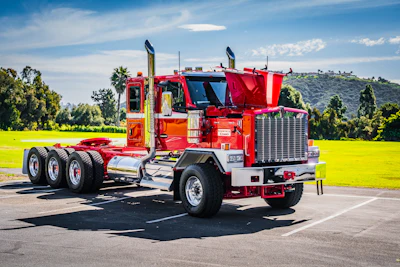
The downswing that hit Class 8 orders with the opening of new order boards in September continued into October, FTR reported Tuesday.
The company states its North American Class 8 preliminary net orders for the month were 15,600 units, down 24% month over month and 36% year over year. FTR adds the orders were nearly 50% below the 10-year October average of 31,089 units, marking a notably weaker-than-expected start to the 2027 order season.
Combined September-October orders totaled 36,002 units, down 20% from the comparable period last year.
FTR estimates the disappointing October results likely reflect ongoing uncertainty about the Environmental Protection Agency’s 2027 NOx regulations and their impact on model year (MY) 2027 truck pricing and production schedules. While OEMs have begun opening their MY 2027 order boards, some may not yet be fully releasing build slots or finalizing pricing pending greater regulatory clarity.
[RELATED: OEMs outline divergent engine strategies for EPA 2027 rules]
Meanwhile, FTR notes fleets may be delaying purchases while awaiting final regulations and potentially more favorable pricing. Under the proposed framework, nonconformance penalties could add an estimated $6,000 to $7,000 per engine if passed through to buyers, compared with an estimated $8,000 to $12,000 premium for fully compliant engines. Actual costs will depend on the final rule and OEM pricing decisions.
“Other factors may also be contributing to the slower ordering pace,” adds Dan Moyer, FTR senior analyst, commercial vehicles. “Fleet capital spending priorities may be shifting toward trailers rather than tractors in the near term. Also, while freight rates are strong, so are costs for fuel, insurance and labor, pressuring margins and possibly limiting purchases for now.
FTR notes one positive is year-to-date orders sit at 278,201 units, up 74% year over year.
[RELATED: Dealers outpace aftermarket in Q3 MarketPulse]
“Underlying replacement needs, tighter capacity and firmer freight rates continue to support Class 8 demand,” says Moyer. “However, with the earlier EPA 2027 pre-buy now complete, orders are increasingly tied to fleet profitability, capital spending priorities and regulatory certainty. Weak October results suggest that some purchases may be deferred rather than canceled, potentially allowing orders to strengthen as emissions requirements, production schedules and equipment pricing become clearer.”