Here’s what you need to know:
- Overnight strikes on oil and gas infrastructure in Iran, Qatar, Saudi Arabia and Kuwait sent oil prices soaring.
- The U.S. is working to mitigate the high cost of oil with releases from the strategic reserves and moving around sanctions, but won't interfere in the futures market for now.
- So far, higher diesel prices are driving up costs but haven't yet affected industrial production or consumer spending, two main drivers of freight.
As the Iranian conflict heated up, with strikes on the world's largest gas natural gas field, South Pars, in Iran and on the world's largest liquified natural gas (LNG) export facility in Qatar, Brent crude prices rose sharply to nearly $120 per barrel. Iran also attacked a Saudi Arabian refinery on the Red Sea and two Kuwaiti refineries.
Strikes hit gas, LNG facilities
Saad al-Kaabi, CEO of QatarEnergy said damage to the LNG facilities will take 12.8 million tons of LNG out of the system for three to five years. ExxonMobil is a partner in the damaged facilities.
"The scenario of LNG coming out of Qatar before, say, June or July, that's pretty well ruled out," says David Butter, an associate fellow at think-tank Chatham House. "It's natural gas going into fertilizers, so on."
The closure of the Strait of Hormuz has rattled oil markets in the past weeks. On Thursday, U.S. allies, including the United Kingdom, France, Germany, Italy, the Netherlands and Japan, signed a statement pledging support for "appropriate efforts" to resume safe passage through the strait.
"We condemn in the strongest terms recent attacks by Iran on unarmed commercial vessels in the Gulf, attacks on civilian infrastructure including oil and gas installations, and the de facto closure of the Strait of Hormuz by Iranian forces," the statement reads. "Freedom of navigation is a fundamental principle of international law, including under the United Nations Convention on the Law of the Sea. ... We express our readiness to contribute to appropriate efforts to ensure safe passage through the Strait. We welcome the commitment of nations who are engaging in preparatory planning."
Efforts to manage the soaring costs of oil
U.S. Treasury Secretary Scott Bessent said in an interview with Fox Business the U.S. may remove sanctions from Iranian oil cargoes already in the strait in an effort to temper rising prices. He also shot down any intervention in oil futures markets.
"We're absolutely not doing that," Bessent says Thursday. "We're not intervening in the financial markets. We are supplying the physical markets."

Dan Pickering, founder and CIO of Pickering Energy partners, says the attacks on facilities today crossed a line.
"If you start changing the ability to produce, whether it's LNG or oil, and all of a sudden you can't move the same amount of volumes because the volumes aren't there ... . This is an escalation," he says.
Last week, the federal government ordered the release of 172 million barrels of oil from the Strategic Petroleum Reserve, the second-largest release in the reserve's history. The release of oil started this week and will roll out over 120 days, CBS News reported.
How will the price of oil affect freight?
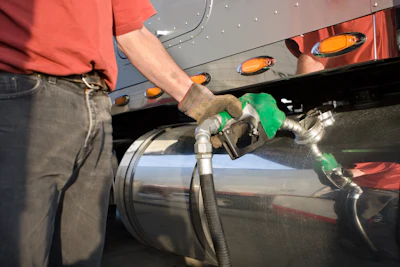
The most obvious answer is in rising diesel prices. Speaking at the ATA's Technology & Maintenance Council spring meeting in Nashville this week, American Trucking Associations President and CEO Chris Spear says the Iran conflict "is having a very direct impact on our industry. The seriousness this operation is having on the supply chain, namely fuel costs, is significant."
Spear added that he was hoping the economy would see an uptick ahead of mid-term elections in 2026, but the conflict is quashing any optimism.
"This is the direct opposite," he says. "I hope the [administration's] goals are achieved. I have great faith in the military that they are successful in their mission set, but that we can move on from this in the coming days and weeks to get back to the domestic elements of what our industry's focused on."
On Wednesday, the Federal Reserve held rates steady, citing uncertainty in the economy stemming from the conflict.
"Near-term measures of inflation expectations have risen in recent weeks, likely reflecting the substantial rise in oil prices caused by the supply disruptions in the Middle East," Fed Reserve Chair Jerome Powell said in a news conference. "Higher energy prices will push up overall inflation, but it is too soon to know the scope and duration of the potential effects on the economy."
Avery Vise, vice president of trucking at FTR Transportation Intelligence, says for now, the rising cost of diesel is coming in the form of higher fuel surcharges. That's the reason for last week's spike in spot rates.
"Until there is evidence that rising crude prices are affecting industrial production or consumer spending — and we think prices would have to rise considerably higher before that happens — we don't expect energy prices to affect freight volume," Vise says. "Rising crude costs are just adding to costs, not curtailing demand. That is especially true when energy prices are rising for a readily understood reason that could turn on a dime, not a combination of factors that are hard to game out."
A month ago, diesel prices were $3.677, according to AAA data. As of press time, it's $5.099.