










Company culture exists in every organization whether leaders intentionally build it or not. Strong cultures with engaged employees outperform competitors four times over whereas weak cultures cost businesses nearly $10 trillion globally through disengaged workers.
- Financial impact: Disengaged employees cost businesses nearly $10 trillion worldwide, with $550 billion lost in the U.S. alone.
- Performance advantage: Companies with engaged employees outperform competitors 4 times over, with 40% higher retention and 19% additional shareholder returns.
- Culture is invisible: Culture exists in employee behaviors and breakroom conversations, not just in handbooks or posters — it reflects how leaders act, not what they say.
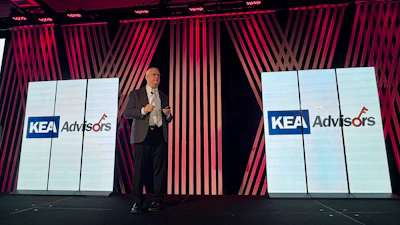
Allen Phibbs held up two bottles on the National Trailer Dealers Association stage Thursday morning.
One bottle was full of water. One was full of air. The bottles looked the same, the KEA Advisors education and training director told the audience. But when you squeeze them, the empty one crumples while the full one holds steady.
That is the difference culture makes.
"Culture doesn't just feel bad," he said Thursday at the association's annual convention in Ponte Vedra Beach, Fla. It can also cost. Nearly $10 trillion has been lost by businesses worldwide from disengaged employees — $550 billion in the U.S. alone.
[MORE FROM NTDA: Former fighter pilot tells trailer dealers how to harness headwinds]
But a strong culture can pay dividends. Companies with engaged employees outperform competitors four times over Phibbs said, with 40% higher retention and 19% additional shareholder returns.
"It's not just a poster on the wall or a page in your handbook," Phibbs said "It's the way [employees] act, their behaviors that are rewarded and reinforced."
And that culture exists whether you build it or not.
"It's what people are whispering in the breakroom," he says. "It's how they feel after a sales meeting or a team meeting."
[RELATED: See how this year's Trailblazer finalists develop culture at their dealerships]
It's a leadership shadow that takes its cue from how leaders act, not necessarily what they say. And too many leaders, Phibbs says, act on what they feel in their gut based on what they can measure. The problem with that is that "you can't strengthen what you can't see," he says.
Also, tracking culture metrics can help your staff.
"If you're not keeping score and you're not reporting it, how do they know if they're winning or losing," Phibbs asked.
Start by measuring where you culture is right now. Find the greatest gap between your team's stated values and their lived behaviors. Make a specific, measurable plan.
"Your culture didn't get where it is overnight," Phibbs said. "And you're not going to change it overnight.

In the afternoon presentation, Phibbs dug more deeply into two aspects of culture: Trust and communication.
"If you don't demonstrate trust and respect, people start to feel unseen, unheard and unappreciated," Phibbs said at the smaller breakout session. "Some people just get quiet. Some will quit. Some will quit and stay."
Employees will underperform in those situations, because leaders can only lead people as far as the people trust you. Trust also helps team members ask for help and find answers more efficiently.
"Are you willing to say, 'I don't know'? Are you willing to say, 'I need help,'" Phibbs asked. "If other people do it and get ridiculed for. it, they won't ever do it again."
Leaders should also have unimpeachable personal integrity and a crystal clear communication strategy. Make sure your team knows how you want them to think, act and interact. And think about how people are going to receive your communication. Be aware of tone and body language and, if you ask questions, actually listen to the answers.
"Your culture is either your biggest risk or your biggest multiplier," Phibbs said. "Make that shift and become the organization nobody wants to leave."